Recognized by NAREA as a quality private Reggio-inspired preschool 2025- 2026
Applications and tours are now available for the 2026-2027 school year.
To book a tour contact our Educational Coordinator
Jamie Glass at 281-465-0955 or email jglass@woodlandschildrensmuseum.org
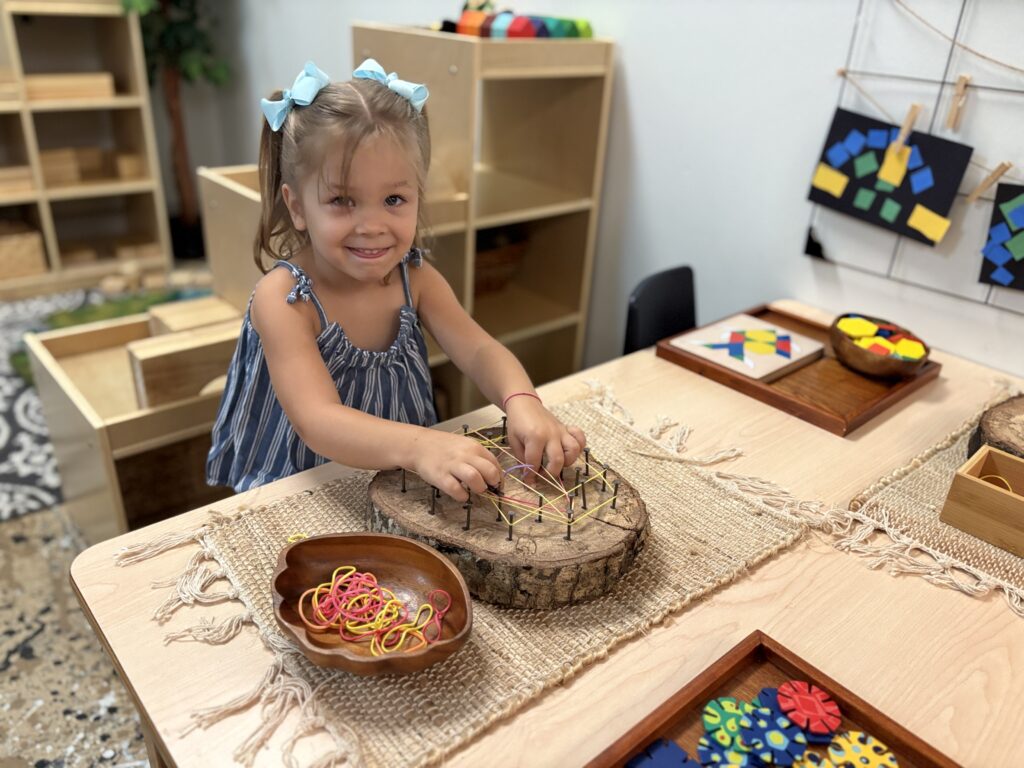
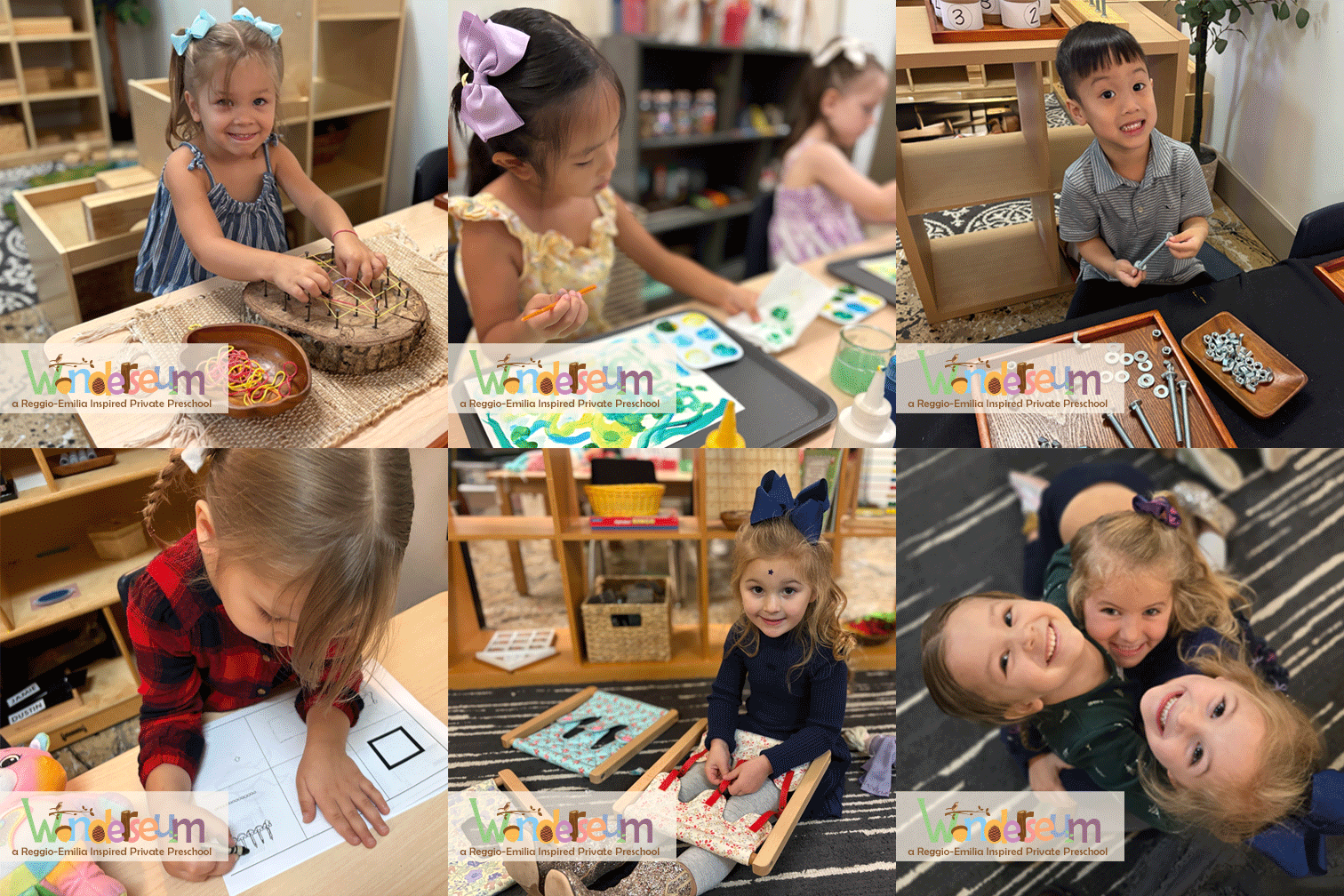
Wonderseum is a Reggio Emilia-inspired private Pre-K environment that offers an inquiry-based learning program for children ages 4-5. We believe that children learn through discovery presented with meaningful interactions, curiosity, and exposure to new opportunities.
Program Philosophy
 Program Description
Wonderseum is a museum-based 10-month private Pre-K program that provides an exceptional learning environment where children can discover, grow, and play together. At The Woodlands Children’s Museum, we view our students as capable and curious individuals with immense potential. TWCM focuses on providing experiences and opportunities for both the child and their parent to grow, ensuring that a child’s success at Wonderseum is a result of the love and involvement of the people invested in their education. This is a well-rounded approach encompassing family, staff, and community. Additionally, our families represent a variety of countries, cultures, and languages, and we cherish the opportunity to learn from their traditions and experiences.
Family Structure
The Woodlands Children’s Museum is a cooperative learning environment that provides children with multiethnic and multicultural experiences. We expect our visitors and partners to honor this global environment, free from discrimination in regard to race, age, gender, physical ability, sexual orientation, family structure, citizenship or social economic background. To encourage acceptance and understanding of individual differences, we pledge:
+ to present opportunities for all to play and engage in discovery within a safe and nurturing environment;
+ to celebrate cultural and global differences through educational programs, calendar festivities and exhibits; and
+ to reach out to the community to ensure that all people feel welcome wherever the museum is represented.
By embracing communication and encouraging interaction among diverse families, The Woodlands Children’s Museum shares in strengthening the bond that begins with our common goal of empowering our next generation.
Inclusion
Our private Pre-K program is committed to fostering an inclusive environment where students of all backgrounds are welcome and respected. While we do not teach or promote any specific theology, we embrace our differences and encourage mutual respect and understanding among all students.
The Reggio Emilia Approach
The Reggio Emilia Approach is founded on the belief that every child is inherently strong, capable, and resilient. It recognizes children as rich with wonder and knowledge, driven by an innate curiosity to understand themselves, their world, and their place within it. This philosophy celebrates the idea that children are not passive recipients of knowledge but active participants in their learning journey.
Reggio Emilia Approach schools, which originated in the 1940s in Reggio Emilia, Italy, are rooted in this view of the child. The approach encourages classrooms that can consist of same-age or multi-age groups, with the central focus being community. Relationships among children, teachers, and parents are seen as foundational to a child’s growth. The curriculum is emergent, driven by the interests of the students.
Teachers carefully observe the spontaneous questions and actions of the children and use these observations to guide the development of projects. Children are encouraged to make mistakes, as these moments are viewed as valuable opportunities for discovery, learning and growth.
In addition to academic learning, social and emotional development is a major focus. Teachers encourage cooperative learning, helping children work together, share ideas, and resolve conflicts. We carefully begin to introduce core subjects with a more concentrated curriculum, utilizing resources like Learning Without Tears for phonics, reading, handwriting and creative writing.
Key Components
- Documentation A vital role in tracking and reflecting on our students’ learning journey is effective documentation. It helps children understand their own leaning processes and allows them to revisit ideas, refining them over time.
- Creativity and Artistic Expression Creativity and artistic expression are integral. Children are encouraged to express their thoughts, ideas, and emotions through various forms of art, including drawing, painting, sculpture, or dramatic play.
- The “Third Teacher” The learning environment itself is often referred to as the “third teacher.” The environment is meticulously arranged to stimulate curiosity, foster communication, and promote collaborative learning.
- Teachers as Guides Teachers are viewed as guides, facilitators, and advocates. They create a learning environment that is both inspiring and supportive, encouraging children to explore and take risks while providing the tools and guidance they need to succeed.
- Process Art In its simplest definition, process art emphasizes the creative journey over the final product. It prioritizes the artist’s exploration and engagement with materials and techniques, rather than focusing on a predetermined outcome or representational image. This approach is particularly valuable in early childhood education, fostering curiosity, sensory exploration, and skill development. It is a powerful tool for self-expression and exploration. Children are encouraged to use a wide range of materials such as paint, clay, fabric, and natural objects to represent their ideas, feelings, and understanding of the world. Through these hands-on, sensory-rich experiences children not only develop artistic techniques, but also gain confidence in their ability to communicate, reflect, and collaborate. In this environment, art is not just an activity but a way for children to engage with their discoveries and learning, while expressing their unique perspectives.
The Reggio Emilia philosophy comes to life through hands-on, project-based learning and all participants—children, parents, and teachers—are seen as learners, with equal opportunities to shape and influence the learning process. The classroom is a place where natural exploration is encouraged, and new materials and concepts are introduced regularly. These experiences are designed to help children develop across the ten learning domains of social-emotional development, language and communication, reading, writing, math, science, social studies, physical development (gross and fine motor), fine arts, and engineering/problem solving.
2026-2027 Enrollment Procedures
1. Browse the Website
The Woodlands Children’s Museum website provides information regarding our preschool program hours of operation, tuition, and philosophy. If you think our program is a good fit, tours may be scheduled by e- mailing our Education Coordinator, Jamie Glass at jglass@woodlandschildrensmuseum.org
2. Student Visit
A student visit will take place at the time of a scheduled tour for 15 minutes in our classroom with one parent/guardian. If the child is comfortable, they may do this observation with the teacher without a parent present, but parents must remain in the museum.
3. Acceptance
We will call or email with acceptance information. Families will have seven business days to accept or decline the offered space. At that time, parents must pay the non-refundable registration and supply fee of $200 for T/TH attendance and $225 for M/W/F attendance to hold the space for their child.
We provide scheduled tours and classroom/teacher visits year-round. However, new students will not be considered or admitted into the current program after October 1 of the present school year in session.
Documentation Required for Enrollment:
-Completed application form
-Signed health statement from your child’s pediatrician stating that they are in
-Signed allergy plan, if needed, and disclosure of any PT, OT, or medical conditions
-Paid registration and supply fee and tuition for the first month.
New Enrollment & Starting School
Priority Enrollment
Returning students and their siblings have priority enrollment.
-February 2, 2026 Priority registration opens for all returning 2025-2026 Wonderseum students and their siblings.
-February 16, 2026 Acceptance letters are e-mailed to all priority applicants.
-March 2, 2026 All priority registration required paperwork, along with the annual $200 supply fee for T/TH session or $225 for M/W/F session, is due for every student for the 2026-2027 school year.
Enrollment cannot be guaranteed if paperwork is not completed by this date.
New Enrollment
–March 9, 2026 New enrollment applications are available to all new families interested in registering for Wonderseum 2026-2027. A scheduled tour and a 15-minute student visit with the Wonderseum teacher is required for all NEW applicants.
-March 23, 2026 All new applicants e-mailed acceptance progress.
-April 1, 2026 All registration required paperwork, along with the annual $200 supply fee for T/TH session or $225 for M/W/F session, is due for all families that HAVE been sent and received acceptance letters for the 2026-2027 school year. Enrollment cannot be guaranteed if paperwork is not completed by this date.
-Enrollment will remain open until both Tuesday/Thursday and Monday/Wednesday/Friday classes have 12 registrants each or until October 1,2026.
Tuition for 2026-2027 School Year
Three Day Program
Monday/Wednesday/Friday
Aug 19, 2026 – May 14, 2027
$5,500 annually or $550 monthly
$225 supply fee for M/W/F
Two Day Program
Tuesday/Thursday
Aug 20, 2026 – May 14, 2027
$3,665 annually or $366.50 monthly
$200 supply fee for T/TH session
Tuition Requirements
Convenience Fees & Discounts
We accept checks, credit card, and ACH (bank) draft payments for tuition. A 5% discount will be given to those who choose to pay for the entire year tuition in one payment time of registration.
Refunds
Tuition is not refunded or decreased due to illness, vacation, absences, emergency closures, pandemics, or any other reason, including withdrawal from the program. Tuition paid in advance is not refundable for any reason. We continue to provide our teachers their full pay even when your child is not in attendance. A 50% reimbursement may be provided at the discretion of the Executive Director on a case-by-case basis for unforeseen circumstances such as loss of home, long-term illness, or loss of a parent or sibling.
Please notify us as soon as possible if you need to withdraw your child from the program. The registration/supply fee and the prepaid tuition are non-refundable. If payment is made in full, tuition will be refunded for the months child will not be in school except for the last month child attended if tuition was not paid.
Tuition Payment Deadlines
Tuition is due on the first day of each month for those paying annually. If payment is received late twice, an automatic payment may be required for all future payments and check payments will no longer be accepted.
Tuition is calculated on annual amount divided into 10 equal payments. The initial tuition payment is due in May 2026 and is applied to the May 2027 payment for your child’s last month. Subsequent payments are due the first week of each month from August-April.